
What Are Wisdom Teeth?
Wisdom teeth, also known as third molars, are the last set of teeth to erupt — usually between the ages of 17 and 25. They’re called “wisdom” teeth because they appear at a more mature age.
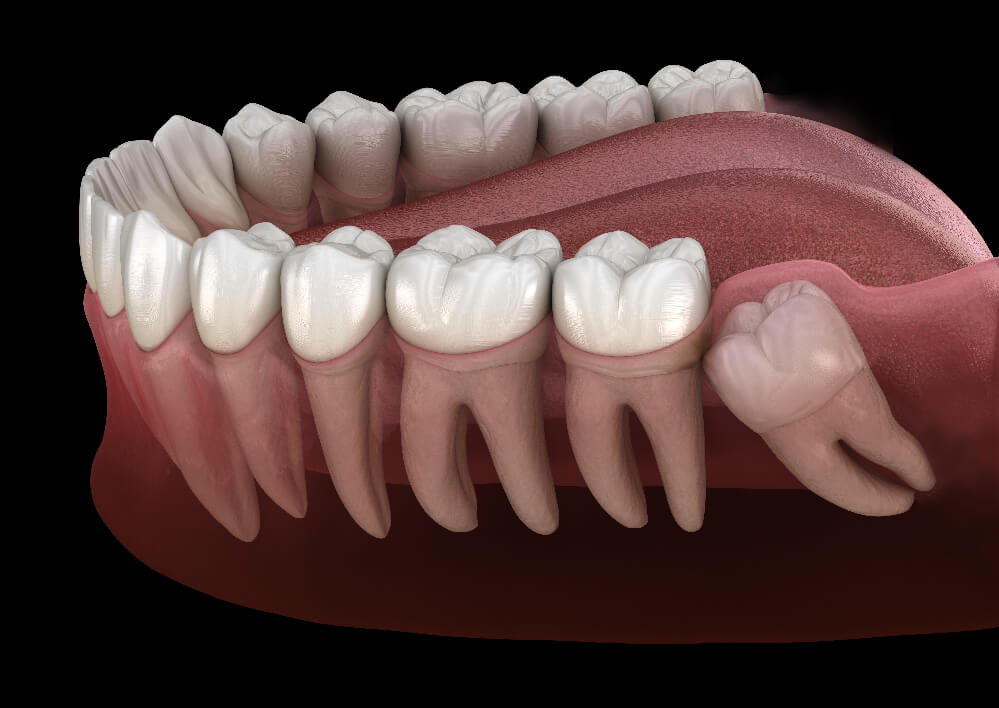
While they were once useful for our ancestors who had larger jaws and tougher diets, modern humans often don’t have enough space in the mouth for them to grow properly. That’s where the problems begin.
—
Common Problems Caused by Wisdom Teeth
When there isn’t enough space, wisdom teeth can:
1. Erupt at an angle – pushing against the adjacent tooth (impaction).
2. Remain trapped under the gum – causing pain and swelling.
3. Lead to infection – known as pericoronitis, a painful inflammation around the tooth.
4. Damage nearby teeth or bone – by exerting pressure or forming cysts.
5. Cause crowding – especially after orthodontic treatment.
If you’ve ever experienced jaw pain, swollen gums, difficulty opening your mouth, or bad breath, it might be your wisdom tooth acting up.
—
When Should Wisdom Teeth Be Removed?
Your dentist or oral surgeon might recommend extraction if:
The tooth is impacted or partially erupted.
You have repeated gum infections around the tooth.
There’s decay or damage to nearby teeth.
X-rays show a risk of cyst formation or bone loss.
In some cases, if the tooth is healthy, fully erupted, and easy to clean, it can be left in place and monitored.
—
What to Expect During Wisdom Tooth Removal
Modern oral and maxillofacial surgery techniques make the procedure safe and comfortable.
Local anesthesia or sedation ensures a pain-free experience.
The surgeon gently removes the tooth, often within 30–45 minutes.
Mild swelling or discomfort can last for a few days, easily managed with prescribed medication and ice packs.
Most patients recover fully within 5–7 days and can return to normal eating soon after.
—
Recovery Tips After Extraction
✅ Apply an ice pack for the first 24 hours.
✅ Eat soft foods like soups, yogurt, or smoothies.
✅ Avoid smoking, alcohol, and straws for a few days.
✅ Maintain gentle oral hygiene — don’t skip brushing but avoid the surgical area initially.
—
Final Thoughts
Wisdom teeth can be unpredictable — some people never have issues, while others face severe pain or infection. The key is early diagnosis and timely treatment.
If you’re experiencing discomfort or unsure about your wisdom teeth, schedule a consultation with an oral surgeon for an X-ray evaluation. Preventive removal often saves you from bigger problems later.